Ecommerce Website Cost in India 2026: Complete Pricing Guide
Exact ecommerce website cost in India 2026 — Shopify, WooCommerce, custom stores, payment gateway, apps, and yearly maintenance with real price ranges.


If you are planning an online store in India, the first question is almost always the same: what is the real ecommerce website cost in India in 2026? The honest answer is a range, not a single quote. A basic catalogue store can start near ₹60,000, while a conversion-focused D2C brand build often lands between ₹2,00,000 and ₹5,00,000 for year one. Advanced custom or multi-vendor platforms can cross ₹10,00,000.
This guide breaks down ecommerce website cost in India with platform pricing, hidden fees, first-year budgets, and a checklist you can use before you pay any agency. The goal is practical: help Indian SMBs and D2C founders budget correctly, avoid cheap-store traps, and launch a store that can actually sell.
Plan your full first-year ecommerce budget — development, apps, content, and maintenance
Most serious small-to-mid ecommerce launches in India should budget ₹1,50,000–₹4,00,000 for year one covering design, development, payment setup, content, and launch support.
Ecommerce Website Cost at a Glance (2026)
Before comparing platforms, start with store type. Feature depth, catalogue size, and integrations drive price more than the word ecommerce itself.
| Store Type | Typical Build Cost | Timeline | Best For |
|---|---|---|---|
| Basic store (up to 50 products) | ₹60,000 – ₹1,50,000 | 2–4 weeks | First-time sellers testing demand |
| Growth D2C store | ₹1,50,000 – ₹4,00,000 | 4–8 weeks | Brands running ads and building trust |
| Advanced custom ecommerce | ₹4,00,000 – ₹15,00,000+ | 2–5 months | Complex catalogues, B2B, custom UX |
| Marketplace / multi-vendor | ₹10,00,000+ | 4–9 months | Platform businesses with sellers |
These ranges reflect typical Indian agency and freelancer quotes in 2026. Ultra-low quotes under ₹25,000 usually mean template dumps with weak security, no conversion thinking, and expensive rebuilds later.
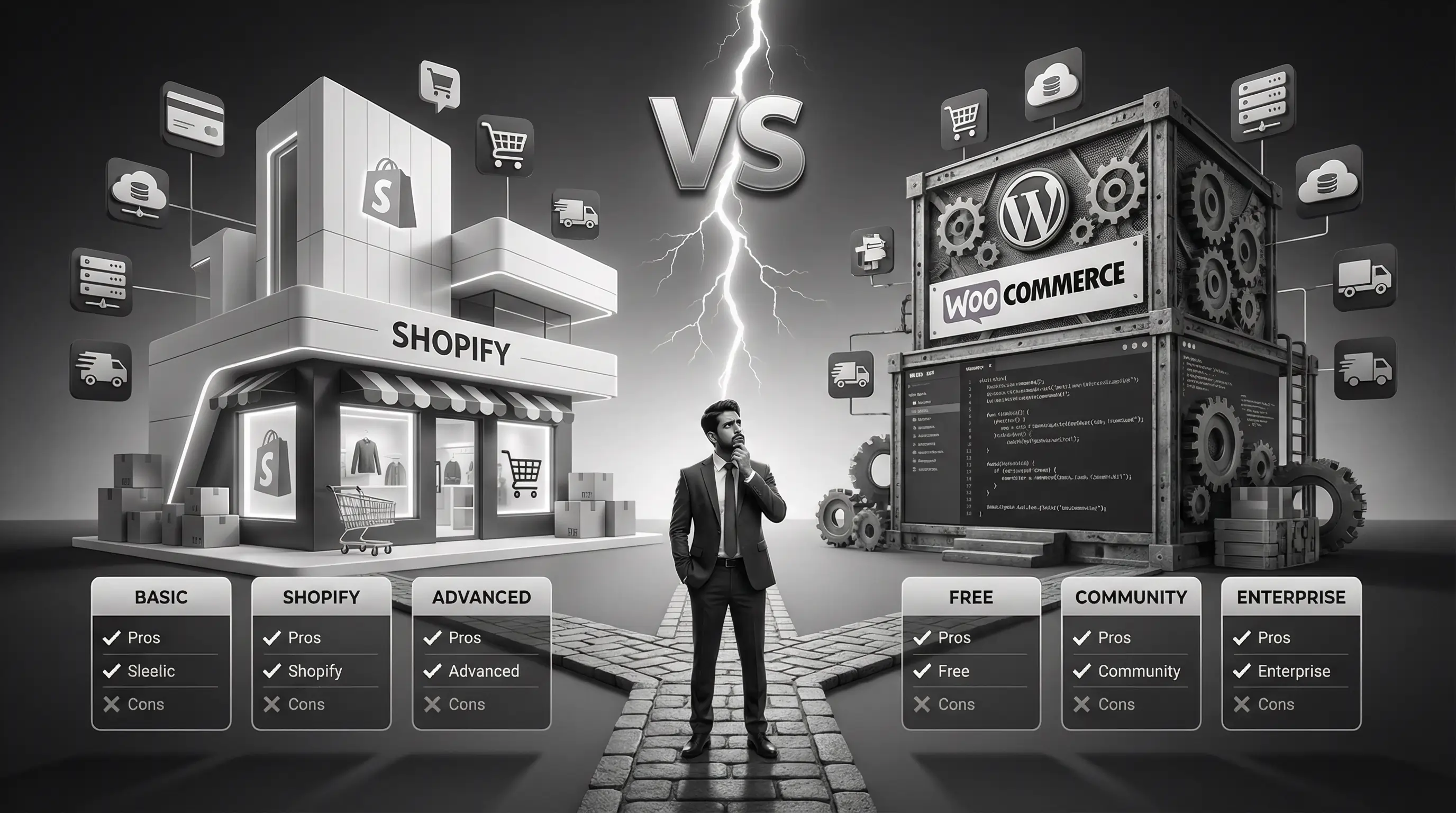
Cost by Platform: Shopify, WooCommerce, and Custom
Platform choice changes both upfront and recurring cost. Compare total cost of ownership for 12 months, not only the development invoice.
1. Shopify store cost in India
Shopify is popular because launch speed is high and the admin is easy for non-technical founders. In India, budget for theme work, apps, and third-party payment gateways because Shopify Payments is not the default local option for every merchant.
- Theme setup and customization: ₹40,000 – ₹2,00,000
- Shopify plan (monthly): roughly ₹2,500 – ₹30,000+ depending on plan and billing cycle
- Apps and subscriptions: ₹2,000 – ₹20,000/month is common once you add reviews, upsells, and shipping tools
- Payment gateway MDR: typically 1.5% – 2.5% of successful transactions plus GST where applicable
Shopify suits brands that want to move fast, run Meta or Google ads, and iterate design without managing servers. Long-term cost rises with apps, so audit subscriptions every quarter.
2. WooCommerce / WordPress store cost
WooCommerce often wins on long-term platform fees because you avoid Shopify-style monthly plan charges. You do pay for quality hosting, security, and plugin maintenance.
- Design and development: ₹60,000 – ₹3,00,000
- Hosting: ₹5,000 – ₹30,000/year for serious stores (cheap shared hosting is a risk)
- Premium plugins and themes: ₹5,000 – ₹40,000/year
- Maintenance: ₹2,000 – ₹10,000/month depending on update and support needs
WooCommerce is strong when you want ownership, flexible Indian payment plugins, and lower recurring platform fees. It needs a partner who understands performance and security, not only page building.
3. Custom ecommerce (Next.js / headless)
Custom or headless builds cost more upfront and give maximum control over UX, speed, and business logic. Choose this when catalogue rules are complex, B2B pricing matters, or brand experience is a competitive advantage.
- Typical starting range: ₹3,00,000 – ₹10,00,000+
- Best for: unique checkout flows, ERP sync, multi-warehouse logic, high-performance storefronts
- Ongoing cost: hosting, CDN, monitoring, and feature releases
Do not compare only website development quotes. Compare 12-month total cost: build + platform + apps + gateway fees + content + maintenance.
What Affects Ecommerce Website Price the Most?
Two stores with 100 products can have very different quotes. These factors move price the most for Indian ecommerce projects:
- Catalogue complexity: variants, size charts, bundles, custom attributes
- Design depth: ready theme versus custom UI and brand system
- Checkout and payments: UPI, cards, net banking, COD rules, EMI, partial payments
- Shipping logic: pin-code serviceability, multiple couriers, weight-based rates
- Integrations: inventory, CRM, ERP, WhatsApp notifications, accounting
- SEO and speed work: Core Web Vitals, schema, structured category architecture
- Admin needs: role permissions, reports, bulk upload, returns workflows
- Content readiness: product photos, copy, policies, and FAQ pages
If your brief says custom everything and your budget is ₹75,000, something will break — usually quality, timeline, or both.
Hidden Costs Most Founders Forget
The development quote is only part of ecommerce website cost in India. Year-one operations add meaningful spend.
| Cost Item | Yearly Estimate (India) | Notes |
|---|---|---|
| Domain + SSL | ₹1,000 – ₹5,000 | Usually small but mandatory |
| Hosting / Shopify plan | ₹10,000 – ₹1,50,000 | Depends on platform and traffic |
| Payment gateway MDR | 1.5% – 2.5% of sales | Scales with revenue |
| Apps / plugins | ₹10,000 – ₹1,00,000 | Reviews, upsell, SMS, shipping |
| Product photography + content | ₹15,000 – ₹1,50,000 | Major conversion lever |
| Maintenance and updates | ₹20,000 – ₹1,00,000 | Security, backups, feature fixes |
| Email / SMS / WhatsApp tools | ₹6,000 – ₹60,000 | Order updates and abandoned cart |
A ₹15,000 complete ecommerce website often means weak security, poor mobile UX, slow pages, and zero conversion strategy. You usually pay later through lost sales and a full rebuild.
Recommended Budgets by Business Stage
Match spend to stage. Overbuilding too early wastes cash. Underbuilding while running ads wastes ad spend.
- Testing an idea: ₹60,000 – ₹1,20,000 for a clean basic store, essential policies, and payment + shipping setup
- Serious D2C launch: ₹2,00,000 – ₹4,00,000 for better design, speed, tracking, and conversion blocks
- Scale-ready brand: ₹4,00,000 – ₹10,00,000+ for custom UX, deeper integrations, and growth tooling
If Meta or Google ads are part of your plan from month one, do not launch on a fragile store. Checkout friction multiplies customer acquisition cost.
Practical Budget Framework for Indian SMBs
Use this simple allocation model for a ₹3,00,000 first-year ecommerce budget:
- 40–50% development and design: theme or custom UI, catalogue setup, payments, shipping
- 15–20% content assets: photos, product copy, category pages, trust content
- 10–15% tools and apps: reviews, analytics, abandoned cart, WhatsApp alerts
- 10–15% maintenance and improvements: fixes, CRO tests, seasonal updates
- 10% contingency: unexpected plugin needs, extra pages, legal/policy updates
This framework keeps founders from spending the entire budget on visuals and then launching with weak product pages and broken logistics.
Launch Checklist Before You Approve Any Quote
- Clear product count, variants, and category structure
- Payment methods required for your audience (UPI, COD rules, EMI)
- Courier and shipping rules by pin code or zone
- GST invoice requirements and tax display
- Return, refund, and shipping policy pages
- Mobile-first product page wireframe
- Tracking plan: Google Analytics 4, Meta Pixel, Google Ads tags
- Ownership of domain, theme, codebase, and store admin
- Written scope for revisions, training, and post-launch support
Mistakes That Inflate Cost or Kill Sales
- Choosing platform only on monthly fee: ignore apps, developer time, and conversion quality
- Skipping mobile checkout testing: most Indian traffic is mobile
- Buying every app on day one: start lean, add only what improves revenue
- No product content budget: empty descriptions and stock photos destroy conversion
- No ownership clarity: make sure credentials and assets are in your company name
- Launching without speed work: slow pages raise bounce rate and ad costs
First-Year Cost Scenarios (Worked Examples)
Use these scenarios to sanity-check agency quotes against your business reality.
Scenario A: Boutique apparel brand (testing demand)
Catalogue of 40 SKUs, Instagram-led traffic, COD + UPI, one courier partner. A practical year-one spend is often ₹1,20,000–₹1,80,000: ₹80,000–₹1,20,000 for store setup, ₹20,000–₹30,000 for photos and copy, and ₹20,000–₹30,000 for tools and maintenance. Keep features lean. Prove repeat purchase before investing in heavy customization.
Scenario B: Supplement or beauty D2C running ads
When paid acquisition is central, budget rises because conversion leaks are expensive. Expect ₹3,00,000–₹5,00,000 in year one for stronger product pages, subscriptions or bundles if needed, speed work, analytics, and abandoned-cart messaging. A cheaper store that drops 20% of mobile checkouts can erase months of ad profit.
Scenario C: B2B wholesale catalogue with dealer pricing
Login-based pricing, bulk enquiry flows, and ERP sync push projects into custom territory. Quotes of ₹5,00,000–₹12,00,000 are common once role permissions, approval workflows, and inventory rules are included. Do not force this into a basic theme and hope plugins will magically handle dealer logic.
Payment, Shipping, and Compliance Cost Notes for India
Indian ecommerce has local requirements that foreign templates often ignore. Build these into scope early:
- UPI-first checkout: many buyers expect UPI as a primary option, not an afterthought
- COD rules: pin-code restrictions, prepaid discounts, and RTO risk controls
- GST invoices: correct tax display and invoice generation for B2C and B2B needs
- Shipping zones: metro vs non-metro rates, weight slabs, and festival capacity planning
- Returns experience: clear windows, prepaid return labels where offered, and status communication
These details rarely appear in ultra-cheap package listings, yet they decide whether customers trust your store after the first order.
How to Evaluate an Ecommerce Agency Quote
When comparing proposals for ecommerce website cost in India, ask for line items instead of one bundled number.
- What is included in design: theme tweak or custom sections?
- How many products and variants are covered in setup?
- Which payment gateways and shipping partners are configured?
- Is GA4, Pixel, and conversion tracking included?
- Who owns theme files, apps, and admin access after payment?
- What is the post-launch support window and hourly rate after that?
- What is excluded: content writing, photography, app subscriptions, paid plugins?
A slightly higher transparent quote is usually safer than a low quote with silent exclusions.
Before go-live, ensure domain registrar, hosting or Shopify store, payment gateway, and analytics accounts are registered to your business email and GST entity.
Frequently Asked Questions (FAQs)
How much does an ecommerce website cost in India in 2026?
A basic online store usually costs ₹60,000–₹2,00,000. Mid-level branded stores often cost ₹2,00,000–₹5,00,000. Advanced custom ecommerce can range ₹5,00,000–₹15,00,000+ depending on features, catalogue complexity, and integrations.
Is Shopify or WooCommerce cheaper in India?
WooCommerce often has lower long-term platform fees if hosting and maintenance are handled well. Shopify is usually faster to launch and easier to manage, but monthly plans and apps add recurring cost. The cheaper option depends on your 12-month total cost, not only setup price.
What hidden costs should I budget for?
Budget for domain, hosting or Shopify plan, SSL, payment gateway MDR, apps or plugins, product photography, content writing, shipping integrations, WhatsApp or SMS tools, and yearly maintenance.
Can I start with a low budget and upgrade later?
Yes, if you are validating demand. Start with a clean basic store, essential tracking, and reliable checkout. Avoid locked-in poor architecture. Plan a migration path so growth does not force a painful rebuild.
How long does ecommerce website development take in India?
Basic stores often take 2–4 weeks. Growth D2C builds usually take 4–8 weeks. Custom or heavily integrated projects can take 2–5 months. Delays usually come from incomplete product data, unclear scope, or late content delivery.
- Basic stores often start around ₹60,000, but serious D2C launches usually need more.
- Compare 12-month total cost, not only development quotes.
- Platform choice changes recurring fees — Shopify speed vs WooCommerce ownership.
- Hidden costs like apps, content, and gateway MDR matter as much as build price.
- Budget for conversion, speed, and checkout reliability, not just page count.
Conclusion
Ecommerce website cost in India in 2026 depends on your stage, catalogue, and growth plan. Spend less only when you are testing. If you are building a brand and running paid acquisition, invest in mobile UX, fast pages, trustworthy product content, and a stable checkout. That combination protects your ad spend and improves repeat purchase potential.
If you want a clear scope and transparent estimate for Shopify, WooCommerce, or custom ecommerce, Arcenik Technologies can map the right build for your budget and sales goals.
Related reading: Shopify vs WooCommerce: Which Platform Should You Choose in 2026? · Payment Gateway Integration in India 2026: Razorpay, PayU, Cashfree Compared · our e-commerce solutions